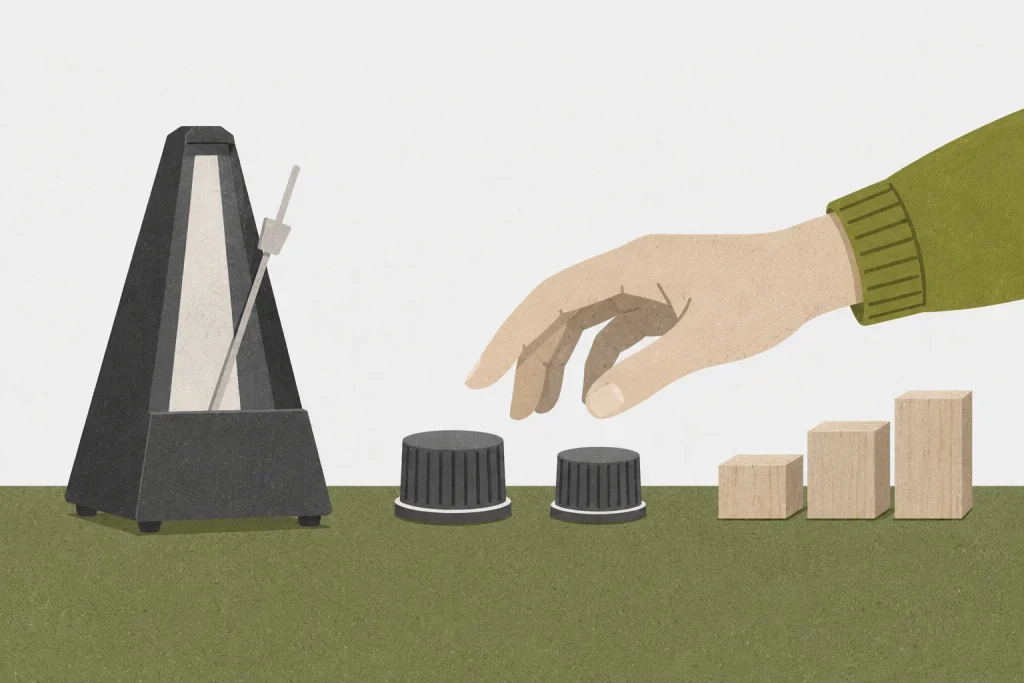
How to Practice Slowly and Still Make Progress
Slow practice works when the tempo is fast enough to preserve the movement, slow enough to observe it, and raised only after repeatable correct attempts.

Focused repetition with feedback, correction, and adjustment.
Lessons in this path
Start with the title that matches the problem you can name today.
Slow practice works when the tempo is fast enough to preserve the movement, slow enough to observe it, and raised only after repeatable correct attempts.
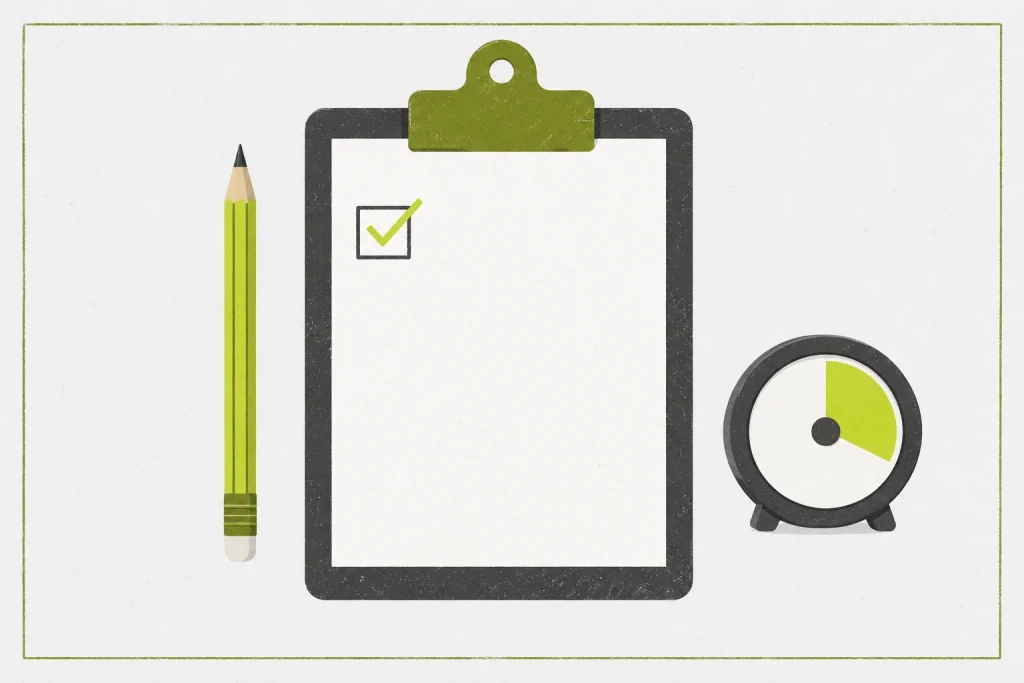
A measurable practice goal names the passage, action, condition, success rule, and feedback source so you know what to try and when to stop.
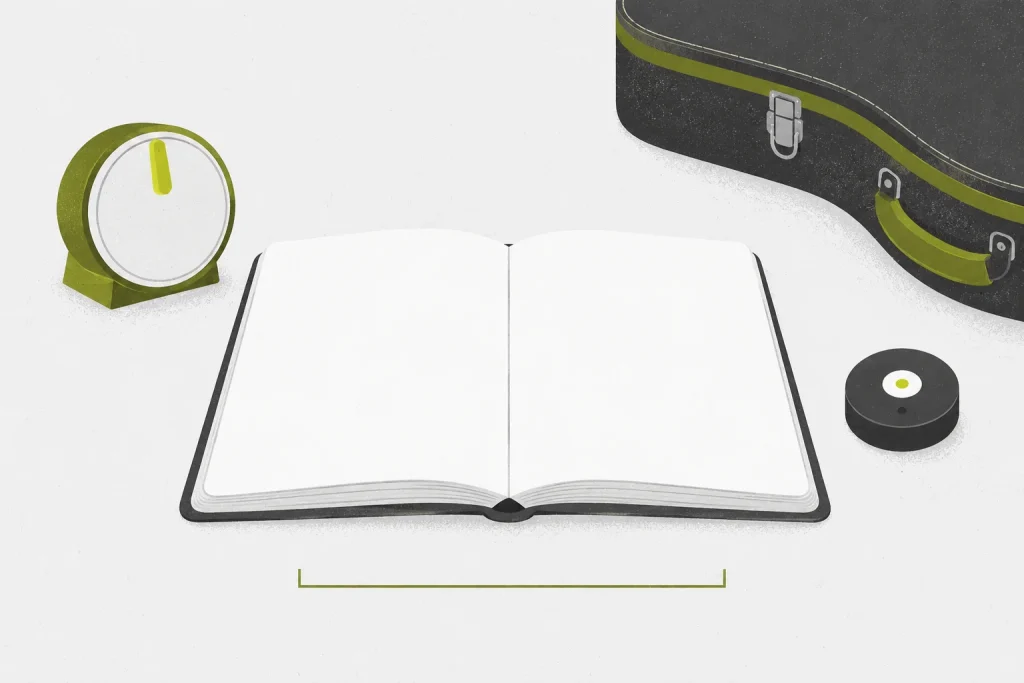
A short practice routine works when every block answers a question: what needs work, what changed, and what should begin the next session?
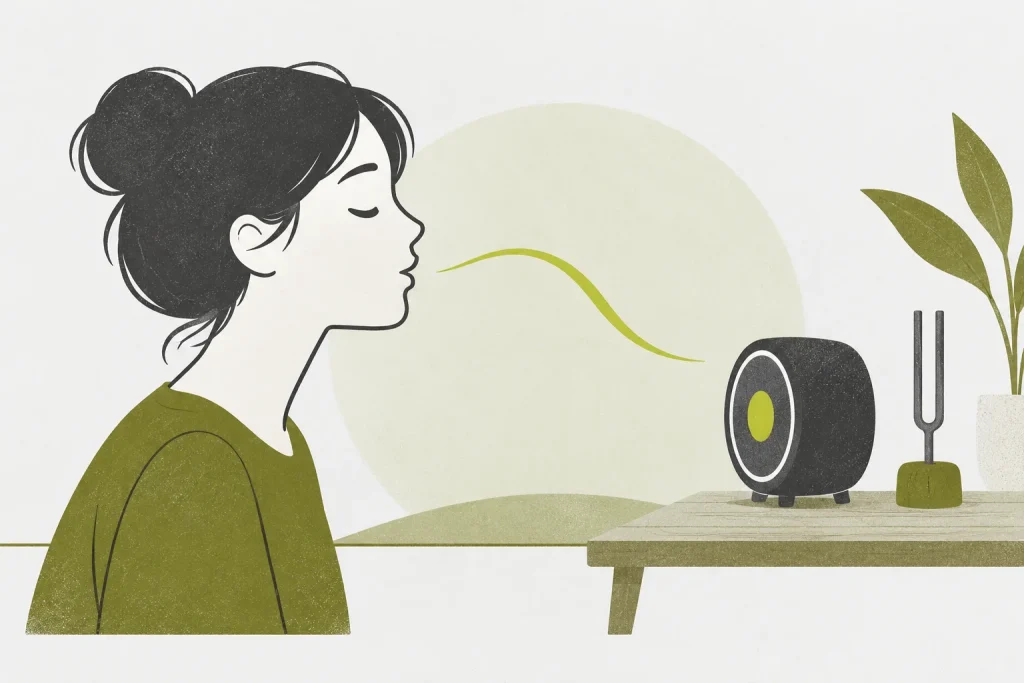
Use one comfortable reference note, approach it with a gentle slide, settle without forcing, and check by listening for the rough pulse between sounds.
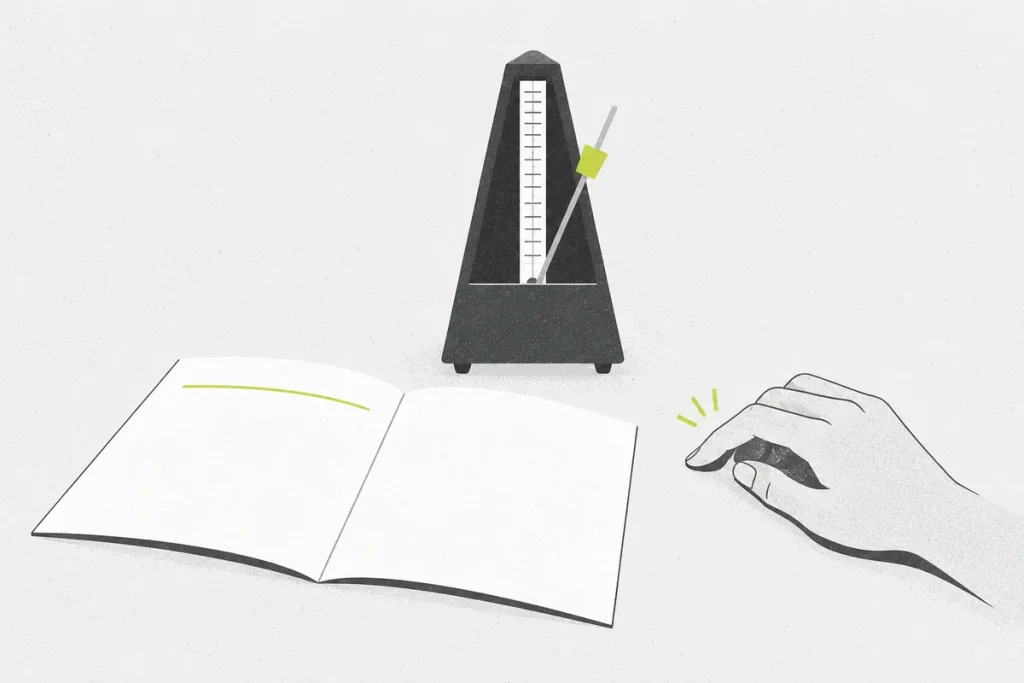
Treat the metronome as a reference point: establish the pulse in your body, join the click, and increase speed only after repeatable clean attempts.
A four-week beginner roadmap built around controlled sound, steady pulse, one small piece, and useful feedback—not a race through a method book.
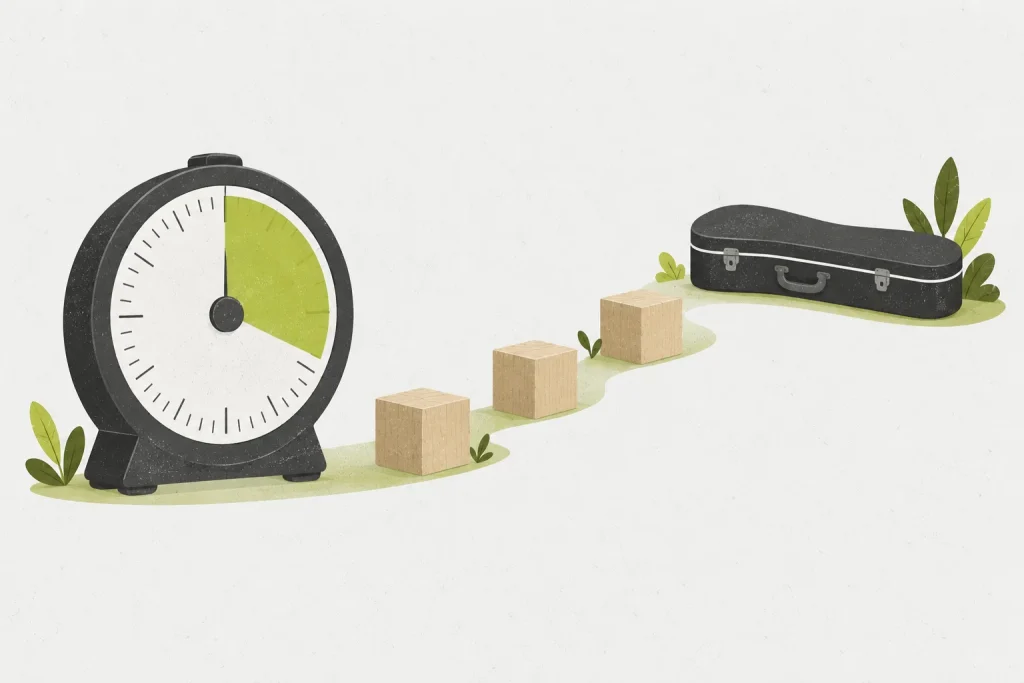
There is no honest universal hour count. Define the musical result you want, then measure progress with observable milestones and feedback.
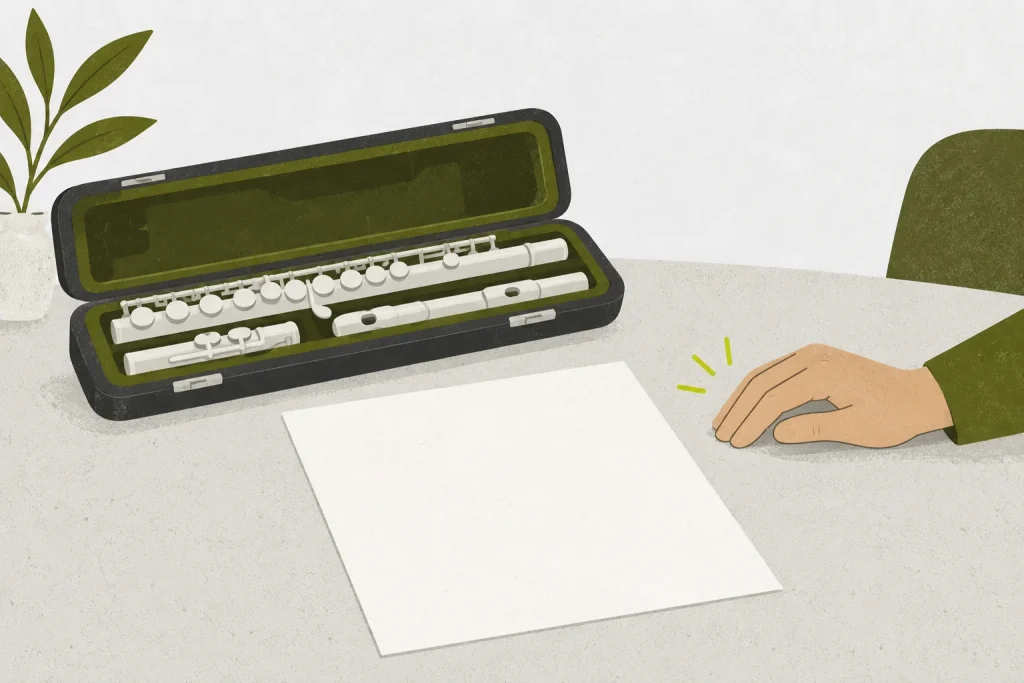
Start by making one controlled sound, keeping a steady pulse, and joining those skills in a tiny musical phrase you can repeat and check.
Effective practice is a feedback loop: choose one observable target, attempt it, compare the result, and make one adjustment before repeating.
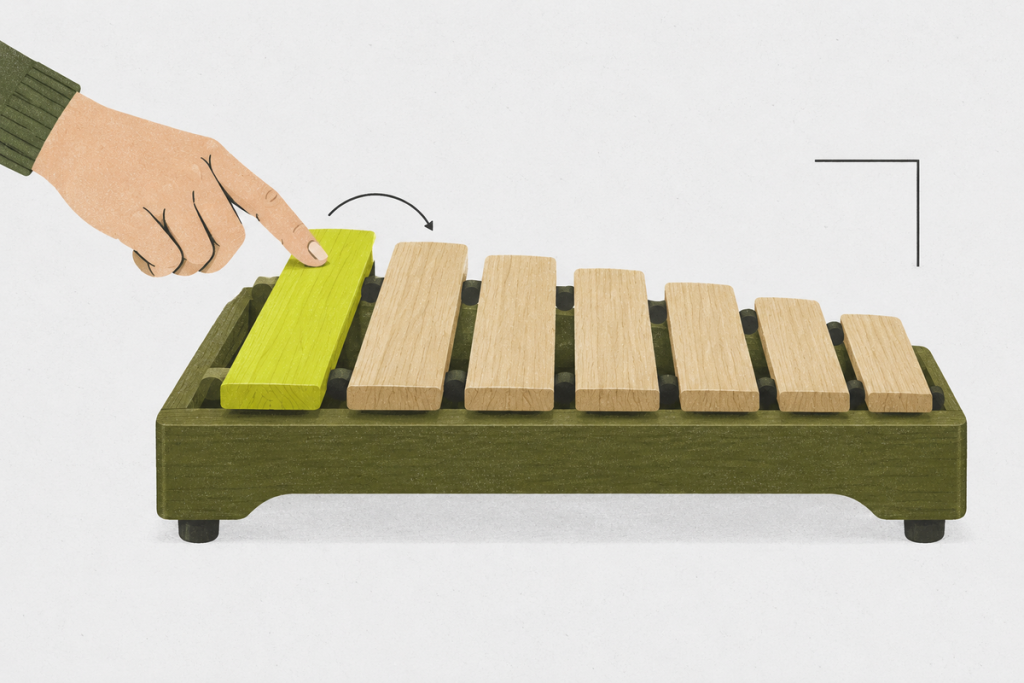
A scale is an ordered collection of pitches. Learn one octave as a map: hear its steps, number its degrees, return home, and make a short phrase.
Move between skills