Active Listening for Musicians: What to Listen For
Replace vague repeated listening with five short passes, one musical question per pass, and an observation you can test in the recording.

Orientation concepts used across starting, reading, rhythm, and listening.
Lessons in this path
Start with the title that matches the problem you can name today.
Replace vague repeated listening with five short passes, one musical question per pass, and an observation you can test in the recording.
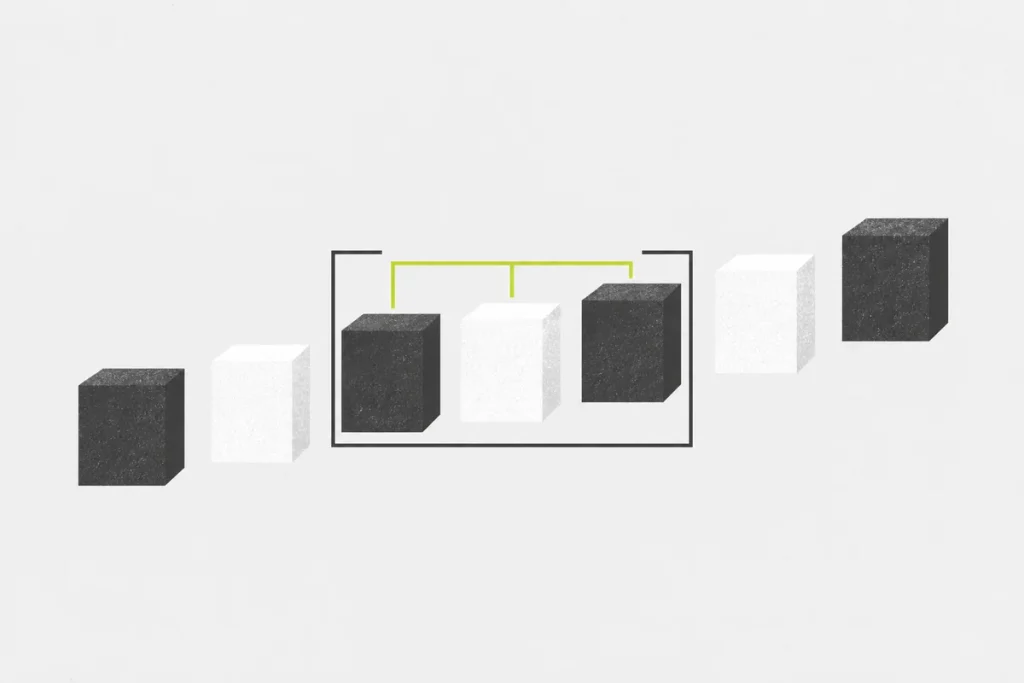
A note is a pitch identity, an interval compares two notes, a scale orders a collection, and a chord combines selected notes.
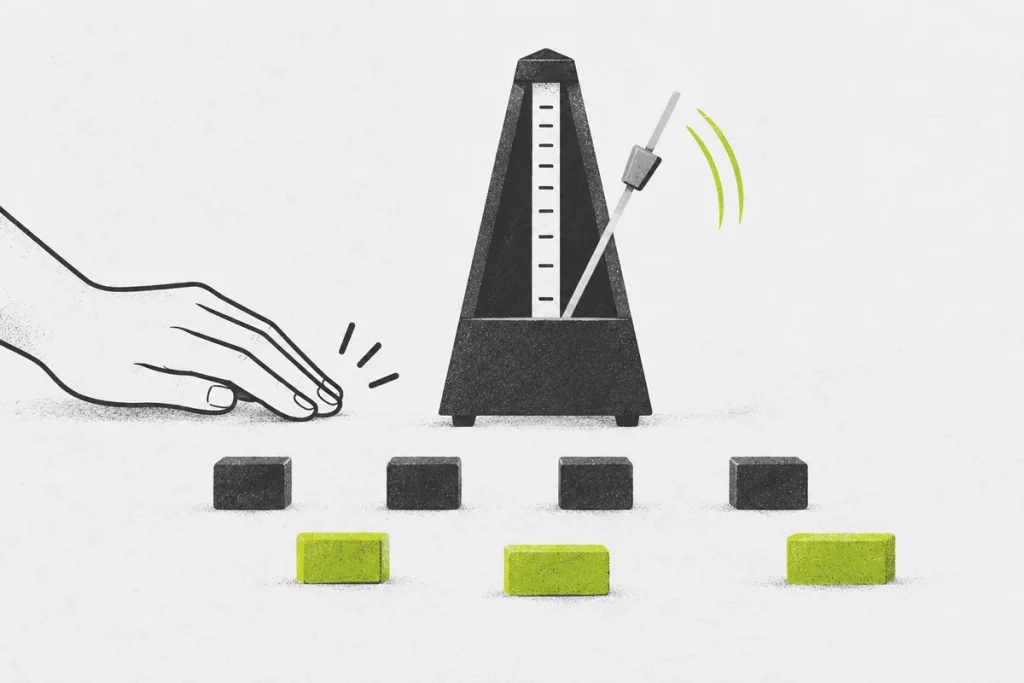
Beat is the steady pulse, rhythm is the pattern placed on it, and tempo is the pulse’s speed. Hear and feel all three in one exercise.
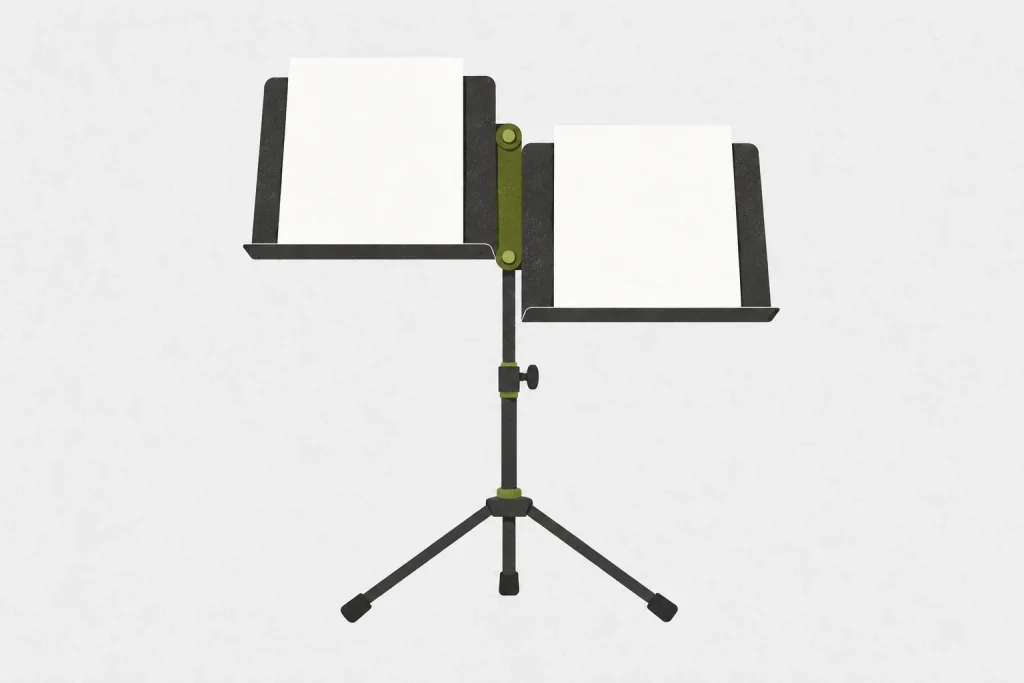
Treble and bass clefs are two pitch maps for the same five-line staff. Learn their G and F landmarks, then connect both through middle C.
Use a few stable landmark notes, read direction and distance, and verify the result before mapping it to your instrument.
A working glossary of beginner music vocabulary, grouped by the musical questions each term helps you answer.
A four-week beginner roadmap built around controlled sound, steady pulse, one small piece, and useful feedback—not a race through a method book.
Start by making one controlled sound, keeping a steady pulse, and joining those skills in a tiny musical phrase you can repeat and check.
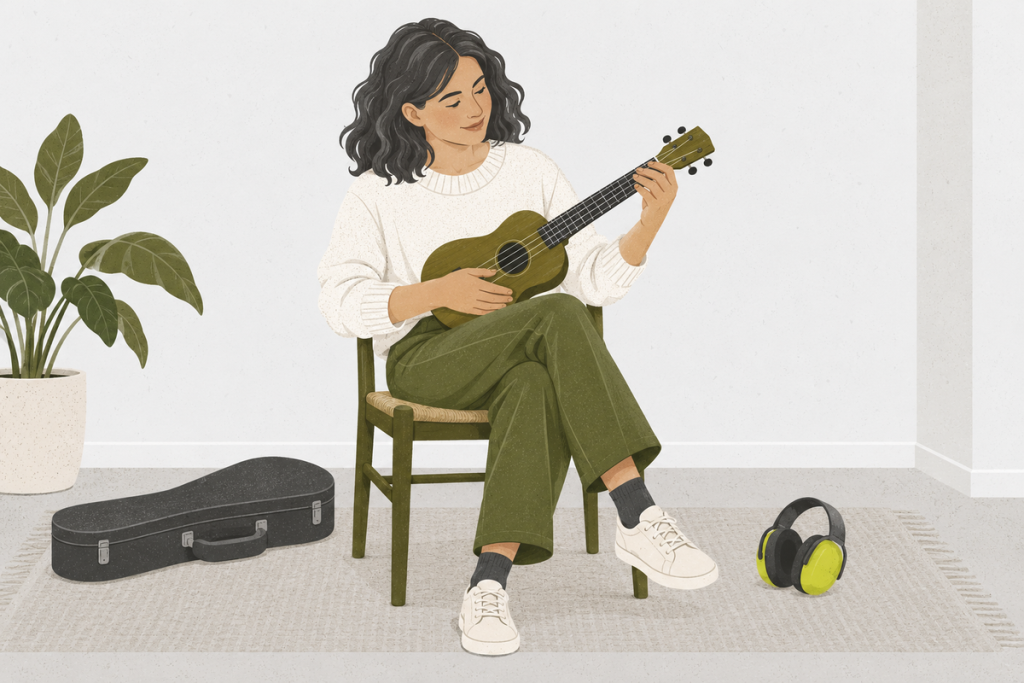
Choose an instrument that fits the sound you want and the life you have. Six practical tests turn a vague preference into a trial you can evaluate.
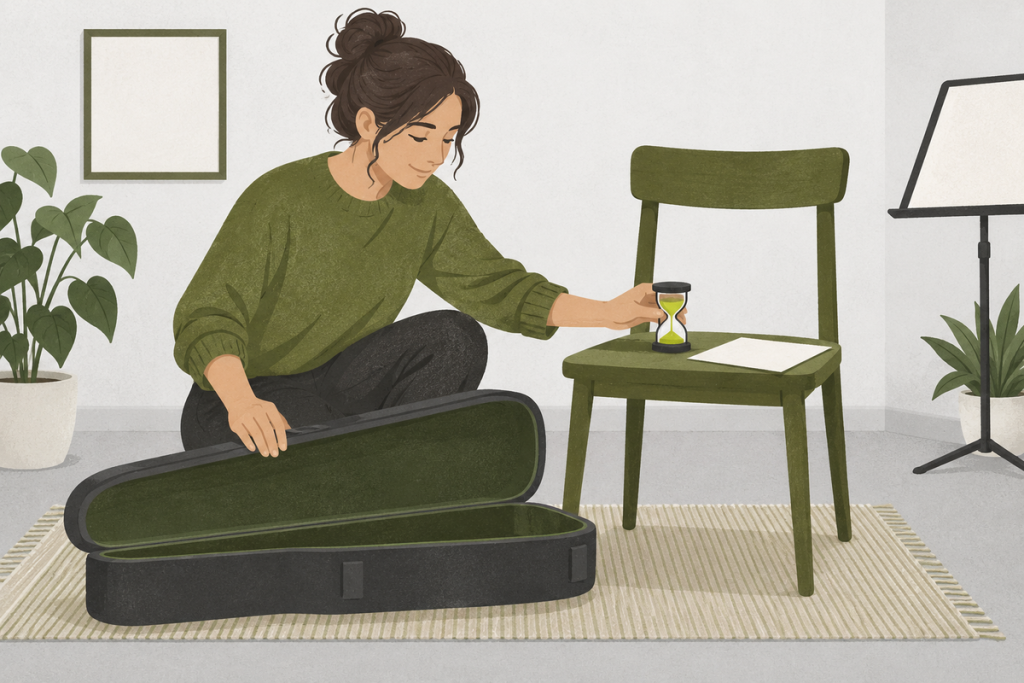
Motivation fluctuates. Build a practice system that still starts on low-energy days, shows evidence of change, and survives a missed week.
Move between skills