
Interval Ear Training for Beginners
Learn intervals as heard distances: identify direction, sing both pitches, count the letter span, and verify the answer before adding more pairs.

High and low position, pitch matching, note identity, and pitch collections.
Lessons in this path
Start with the title that matches the problem you can name today.
Learn intervals as heard distances: identify direction, sing both pitches, count the letter span, and verify the answer before adding more pairs.
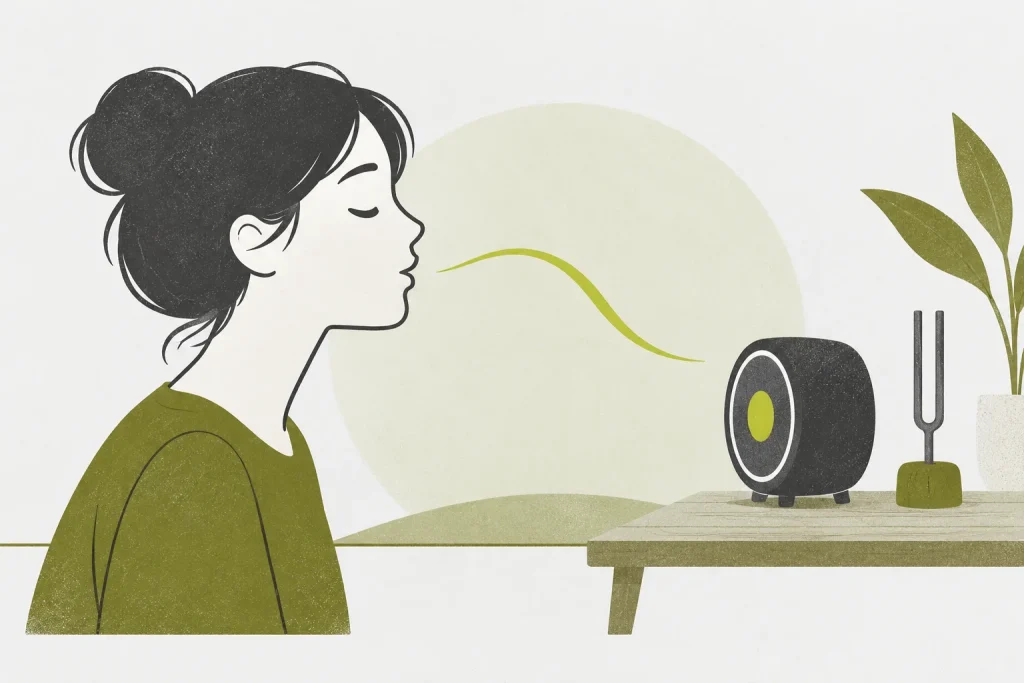
Use one comfortable reference note, approach it with a gentle slide, settle without forcing, and check by listening for the rough pulse between sounds.
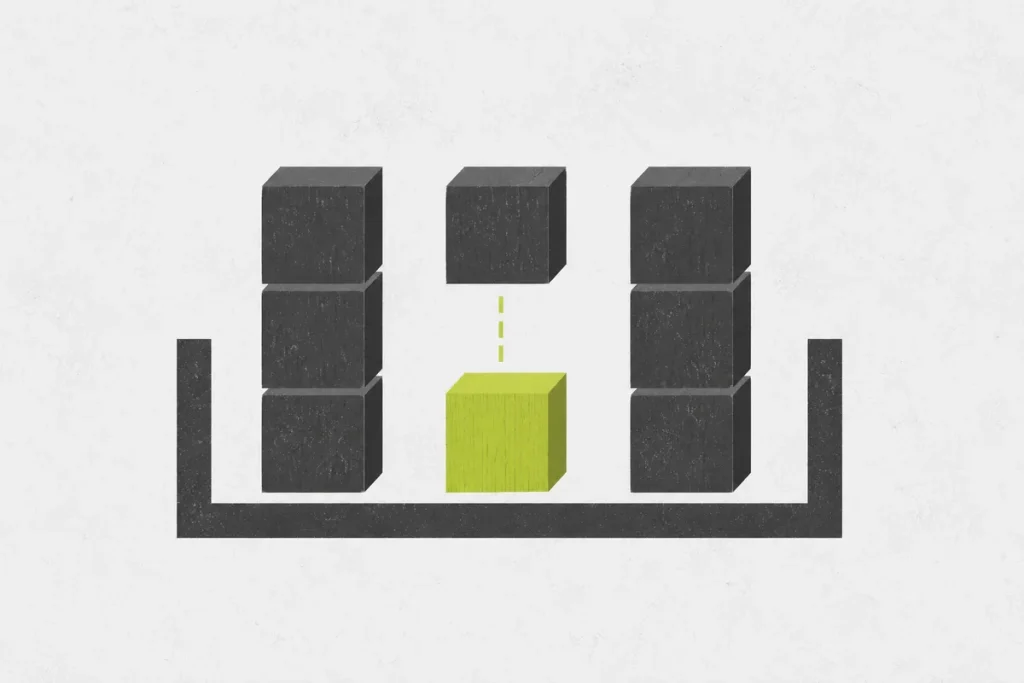
Major and minor triads share a root and perfect fifth; changing the third changes the chord quality. Build and hear both without emotion stereotypes.
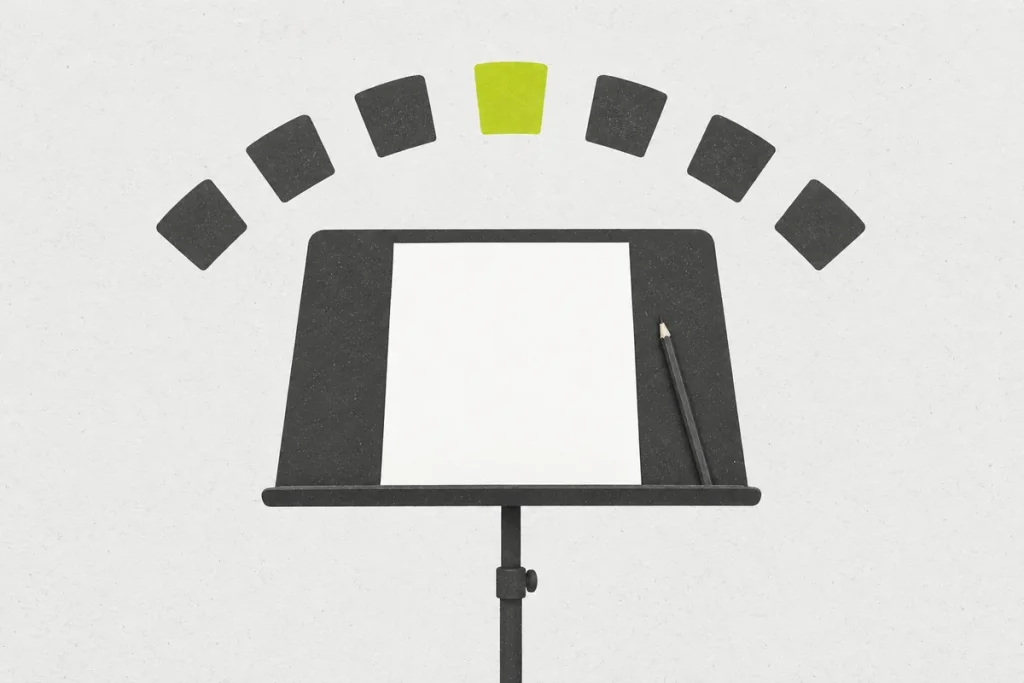
A key signature places a recurring set of sharps or flats after the clef so the same accidentals do not need to be rewritten on every affected note.
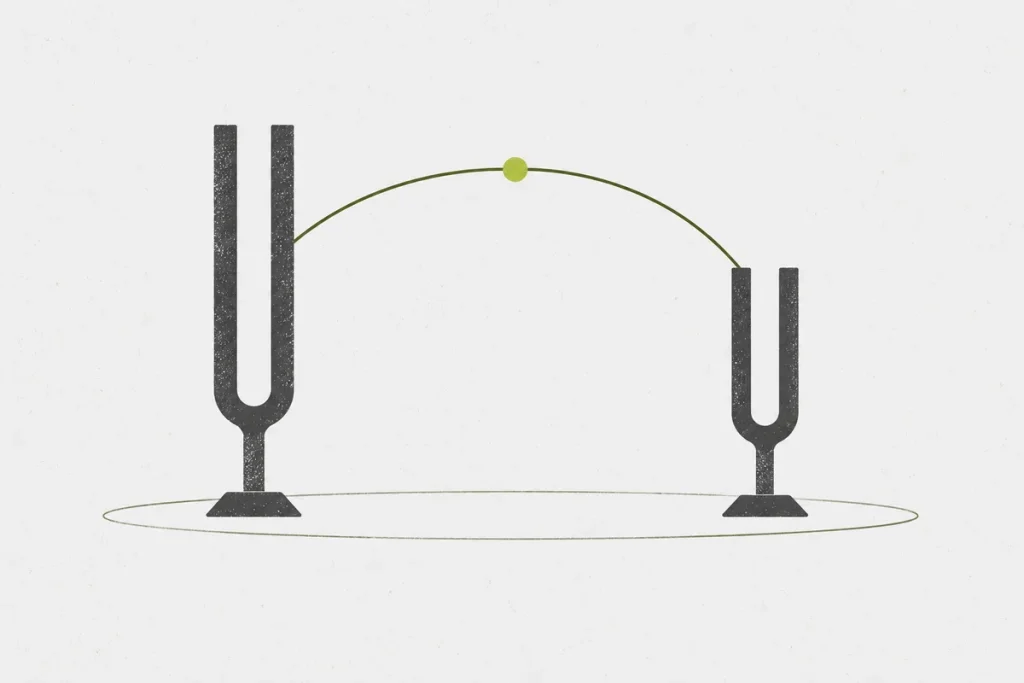
An interval is the distance between two pitches. Count the written letter span first; add major, minor, or perfect quality after the number is secure.
A note is a pitch identity, an interval compares two notes, a scale orders a collection, and a chord combines selected notes.
Treble and bass clefs are two pitch maps for the same five-line staff. Learn their G and F landmarks, then connect both through middle C.
Use a few stable landmark notes, read direction and distance, and verify the result before mapping it to your instrument.
A working glossary of beginner music vocabulary, grouped by the musical questions each term helps you answer.
Start with the music mechanic that is blocking you now. This practical map connects pitch, rhythm, notation, intervals, scales, and chords through one five-minute ex...
Move between skills