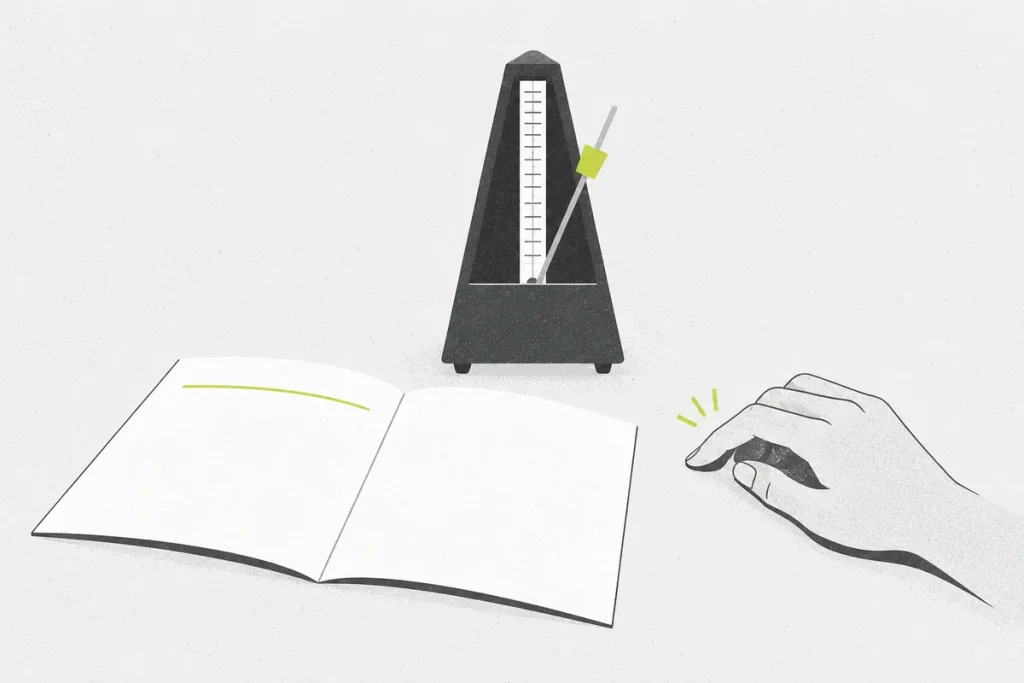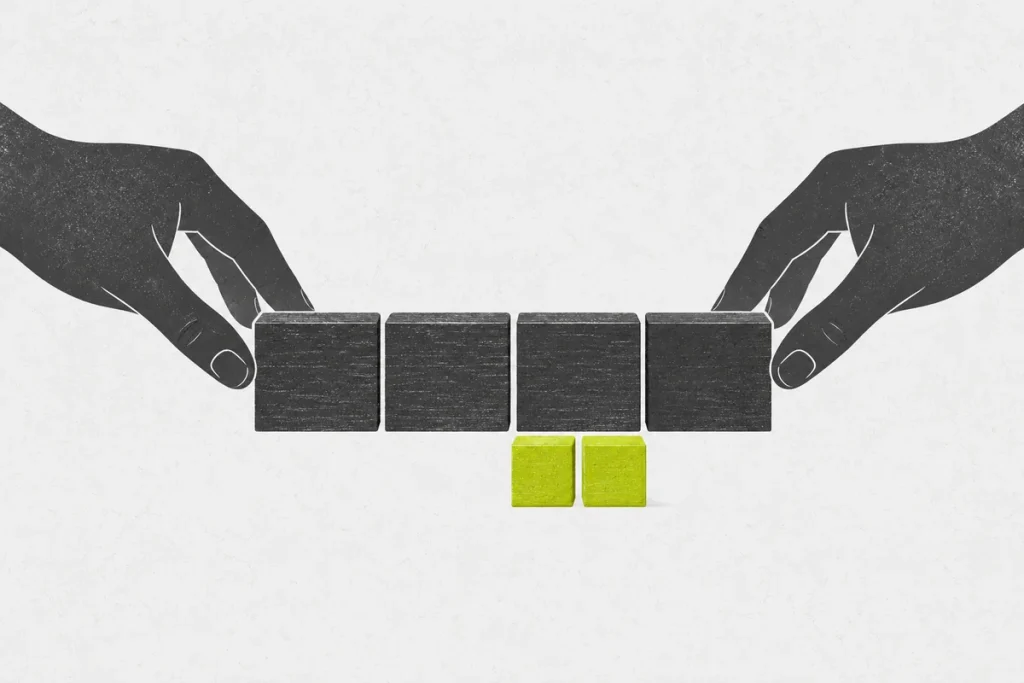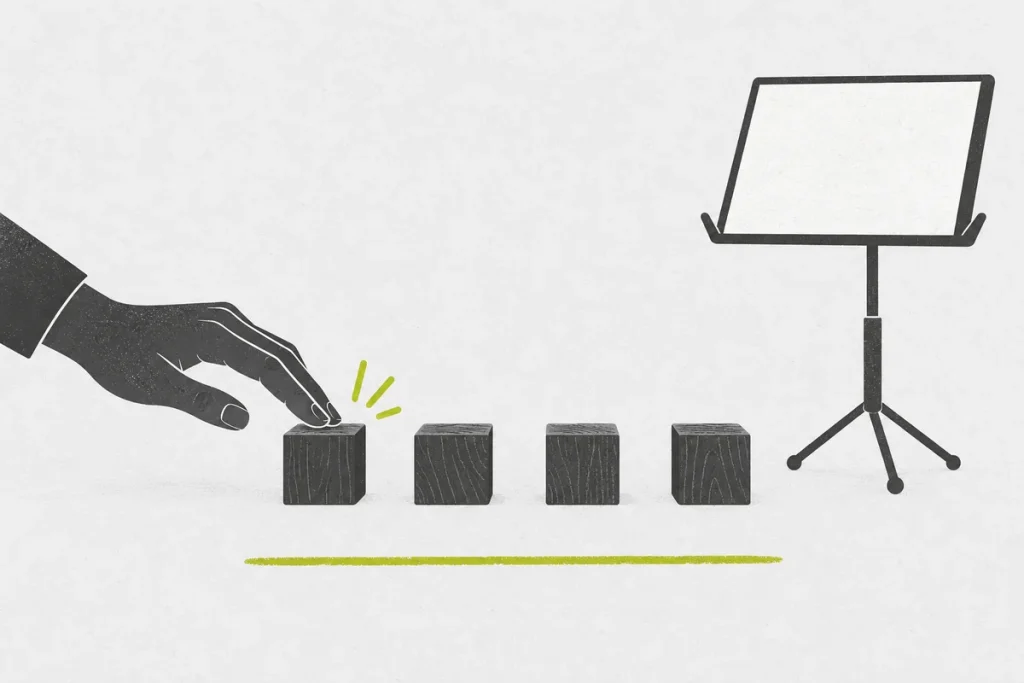
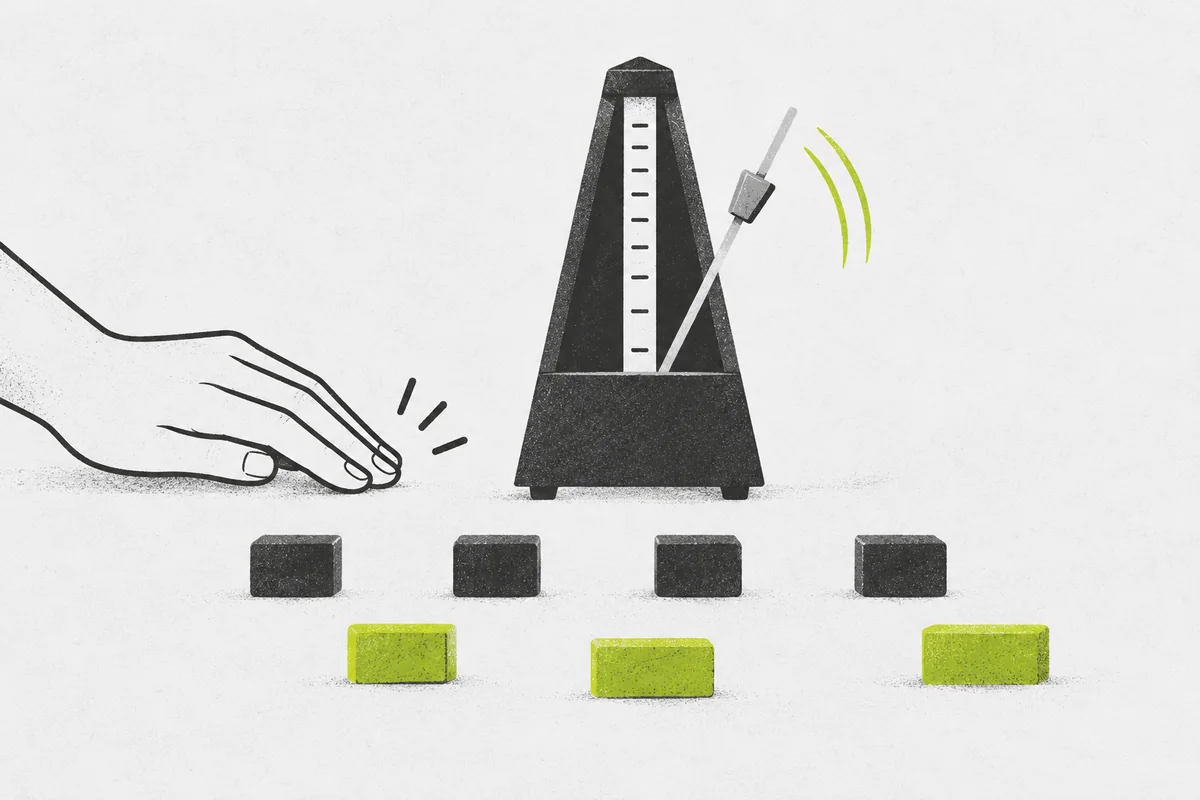
The beat, rhythm, and tempo difference becomes clear when you give each term one job. The beat is the steady pulse you can tap. Rhythm is the pattern of sounds and silences placed on that pulse. Tempo is how fast the pulse moves.
They work together, but they are not interchangeable. A rhythm can stay the same while the tempo changes. A beat can continue through a silence. Once you can separate those ideas, counting and metronome practice become much easier.
The short answer
| Term | Plain meaning | Question it answers |
|---|---|---|
| Beat or pulse | A regularly recurring point in musical time | Where is the steady tap? |
| Rhythm | The pattern of sound and silence against the beat | When do events happen? |
| Tempo | The speed of the beat | How quickly do the beats pass? |
In common Western theory, a beat is a recurring pulse. Tempo may be measured in beats per minute (BPM): 60 BPM means 60 designated beats in one minute. Rhythm describes the event pattern, not the speed itself. Open Music Theory’s simple-meter chapter defines the beat as a regularly recurring pulse, while Ableton’s interactive lesson demonstrates how BPM changes the pace.
Use this quick diagnostic when the words blur together:
- If the underlying tap continues through a silence, you are tracking the beat.
- If the same claps occupy the same relative positions, you are preserving the rhythm.
- If the whole grid passes more quickly or slowly, you are changing the tempo.
Only one layer changes in each test. That makes the source of a timing problem easier to hear.
One example shows all three
Tap four evenly spaced points on a table:
1 — 2 — 3 — 4
That steady row is the beat. Now keep tapping, but clap only on beats one, the “and” after two, and four:
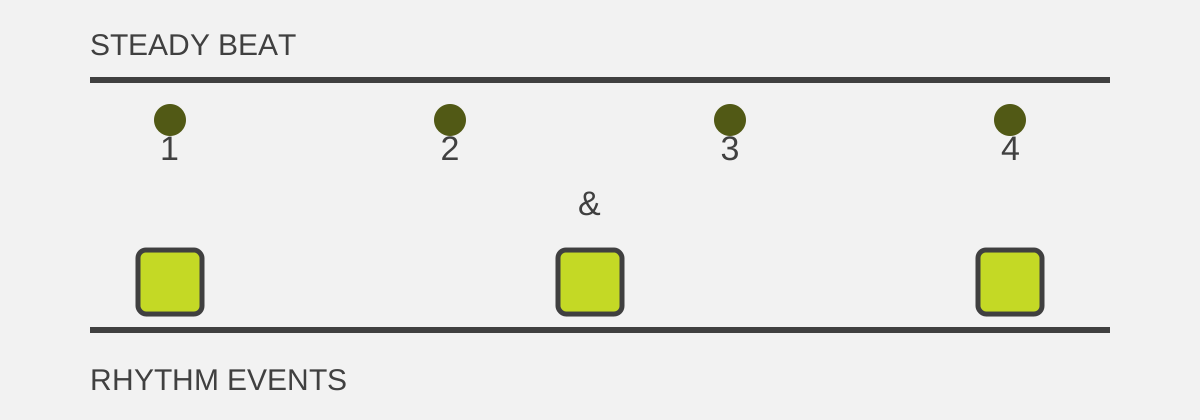
The taps continue even where there is no clap. The clap events form the rhythm. Perform the same grid slowly, then more quickly. The event positions have not changed, but the tempo has.
This is the key relationship:
Beat supplies the grid. Rhythm chooses positions on the grid. Tempo controls how quickly the grid passes.
Beat: the pulse you return to
A beat is not necessarily a drum sound. It is the recurring pulse you perceive or maintain. You might feel it as a foot tap, a conductor’s motion, or the regular points behind a melody.
The beat can continue through held notes and rests. That matters because beginners often stop counting when they stop making sound. Keep the pulse moving silently and the next entrance has somewhere to land.
Beat is also different from meter. Beat is the recurring pulse; meter groups beats into patterns such as two, three, or four. If you count 1 2 3 4 repeatedly, you are grouping the pulse in fours. Learn that next in How to Count Beats in Music.
Rhythm: the pattern on the pulse
Rhythm tells you when sounds begin, how long they last, and where silence occurs. The pattern can be simple—one clap on every beat—or it can use events between beats.
Try speaking this pattern while your hand keeps the pulse:
CLAP — rest — CLAP — CLAP
The pulse stays equal underneath. If the spaces between your taps shrink when the clap pattern gets busy, the rhythm is pulling your beat off course. Remove the clap, restore the pulse, and add the pattern again.
Written note values are one way of recording rhythmic duration. If those symbols are new, Note Values and Rests connects the page to spoken counting.
Tempo: the speed, not the pattern
Tempo controls the rate of the beat. A metronome set to 60 BPM produces one click per second when each click represents one beat. At 120 BPM, those designated beats arrive twice as often.
Changing tempo does not automatically change rhythm. The pattern clap, rest, clap, clap remains recognizable at different speeds as long as the proportional spacing stays intact.
Tempo markings and BPM are instructions, not a test of worth. A slower tempo gives you more time to coordinate. It is useful when it makes a movement accurate enough to observe. The metronome guide shows how to choose that working speed.
Hear → Understand → Try
Hear
Set a metronome to a comfortable pace, or make four even taps without one. Listen for eight beats before adding anything.
Understand
The click or tap represents the beat. Your chosen clap pattern represents rhythm. The BPM setting represents tempo. You are keeping three labels attached to three different jobs.
Try
- Tap and count
1 2 3 4four times. - Keep tapping and clap only on one and three.
- Keep the same rhythm and make the pulse slightly slower.
- Return to the first speed without adding extra claps.
Success check: the tap spacing remains even, the claps land on the intended numbers, and changing speed does not change which beats receive claps.
Common mix-ups
“The drums are the beat”
Drums often make the pulse obvious, but a beat can be implied by any musical part or maintained internally. In casual speech, “beat” may also mean a whole drum pattern. In theory practice, use beat for the pulse and rhythm for the event pattern so your instructions stay precise.
“Fast music has more rhythm”
Fast music has a quicker tempo, not necessarily a more complex rhythm. A slow passage can contain dense subdivisions; a fast passage can place one event on each beat.
“A rest means the beat stops”
A rest stops the performed sound for a written duration. The underlying pulse continues unless the music explicitly changes or suspends it.
What to learn next
If you can hold the pulse but lose your place in groups, practise counting beats. If the pulse itself drifts, use the body-first method in How to Improve Rhythm and Timing. When both feel stable, learn to place events between beats with rhythm subdivision.
Keep the distinction practical: tap the beat, perform the rhythm, and choose the tempo.